In today's digital age, laptops are becoming increasingly thinner and lighter, which improves portability but reduces the number of ports. The emergence of USB-C hubs perfectly solves this problem. It can greatly expand the functionality of laptops and provide additional ports for connecting traditional peripherals such as printers, mice, and keyboards. But faced with a wide range of USB-C hubs on the market, how can you make the right choice? Here are the key points for selection.
1. Clarify your own equipment needs
(I) Inventory of existing and planned peripherals
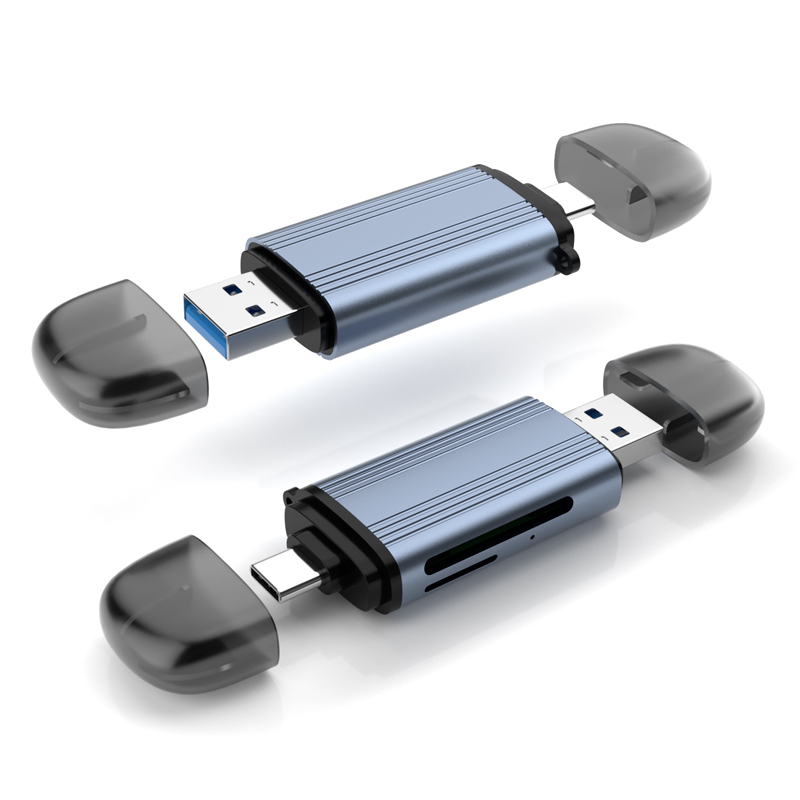
Before choosing a USB-C hub, you need to carefully examine the peripherals you already have or the ones you plan to purchase. For example, if you have an old external hard drive that uses a traditional USB-A cable, then a USB-A port on the hub is essential; if you are used to manually backing up photos from your SLR camera via an SD card, then whether the hub has an SD card slot is also a consideration; or if you are in an environment where the Wi-Fi connection is unstable and you prefer to use Ethernet, then a hub with an Ethernet port is the first choice. By clarifying these needs, you can accurately determine the type of port you need. This advice also applies to Windows users, after all, Macs also have certain limitations in terms of USB-C connections.
Also, consider the connection of devices in daily use scenarios. For example, you may need to use a mouse and keyboard at the same time, and also connect a printer to work. Although you can disconnect the keyboard when printing, frequent plugging and unplugging will undoubtedly bring a lot of inconvenience. Therefore, when choosing a hub, you need to make sure that its number and type of ports can meet the needs of connecting multiple commonly used devices at the same time.
(II) Understand the port configuration of your laptop
It is also crucial to know the port situation of your laptop or tablet. You need to confirm whether the device has one or two USB-C ports. If the device only has one port, is there a separate charging connection? If your laptop or tablet only has one USB-C port and it is used exclusively for charging, then you need to buy a USB-C hub with a dedicated charging input port.
Also, pay attention to the input power allowed by the port and confirm that the power is enough to meet the power needs of the laptop. Otherwise, you may be in a dilemma and be forced to choose between charging the laptop and connecting other devices, which is obviously meaningless. When your laptop is low on power, most devices will pop up a "slow charger" warning, which means that your charging power may not meet the needs of the device.
(III) Pay attention to the USB-C port of the monitor
In recent years, more and more monitors are equipped with USB-C ports as well as HDMI and DisplayPort input interfaces. In some ways, this is a positive change because it means that your monitor may no longer need a separate USB-C hub.
However, there are some problems here. First, the monitor port is usually set on the back of the monitor, which is not easy to reach. Finding the right port on the back of a large and bulky monitor is not an easy task. So, to avoid this hassle, you may want to invest in an affordable USB-C hub.
Second, the monitor's USB-C port may actually be a video-in port. This means that instead of running an HDMI cable between your PC and monitor, you can achieve the same functionality by just running a USB-C to USB-C cable. How do you tell? You can start by checking out our roundup of the best USB-C monitors, then read on. We'll distinguish between the different types of USB-C ports to help you make the right decision.
2, consider your device's power needs
Remember that a hub's power port is primarily intended to power your laptop, not charge your phone. A hub can still charge your phone, but there are some caveats. A "bus-powered" USB hub connects to your laptop, takes power from the computer, and shares it with multiple devices, but this often doesn't work well.
Some docking stations come with a USB-C port whose sole purpose is to connect to your laptop's USB-C charger. This port not only powers the laptop, but also other ports connected to the docking station. Such devices usually provide more power and can quickly charge mobile phones. When choosing a hub, you should judge whether its power supply method and capabilities meet the usage scenario based on the power requirements of your own devices.
3. Deep understanding of USB-C technology
USB-C ports on laptops run at speeds of 5Gbps or 10Gbps, and 10Gbps ports are now almost universal. For devices such as printers, mice, keyboards, or hard drives, this speed is more than enough, even if multiple such devices are connected at the same time. However, products such as monitors, Ethernet, and high-speed SSDs have high bandwidth requirements and may occupy a lot of bandwidth resources.
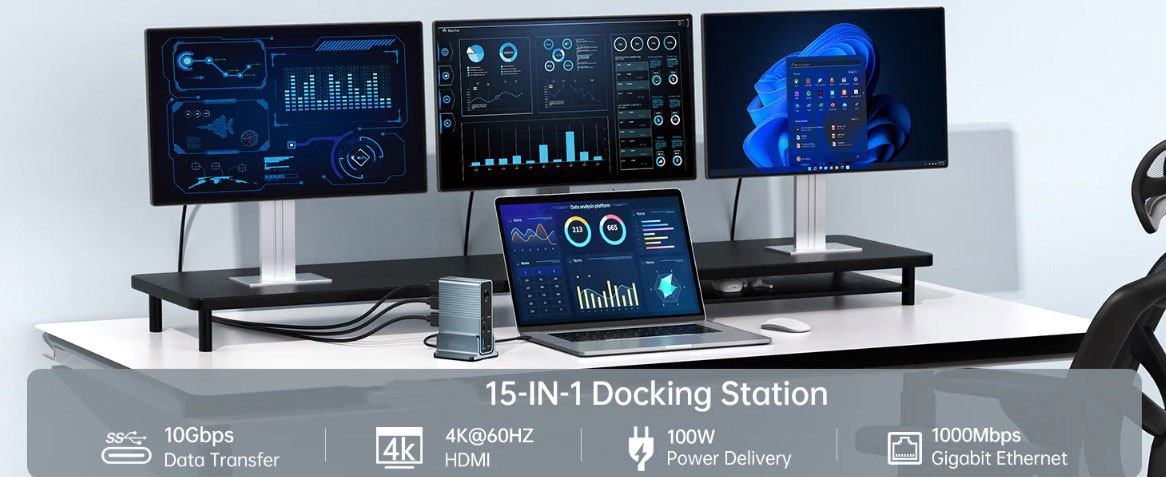
In actual use, display technology often has the greatest impact on the product you choose. If you just want to connect one or two external 1080p monitors, then a USB-C adapter will usually meet your needs, provided that the adapter has available ports, and this method is undoubtedly the lowest cost option. But once you're trying to connect one or two 1440p or 4K monitors, you might want to consider something like a USB-C dock. There are ways to partially solve the problem, though, such as using a separate Wi-Fi connection instead of plugging an Ethernet cable into a USB-C adapter to reduce the bandwidth usage of the USB-C port.
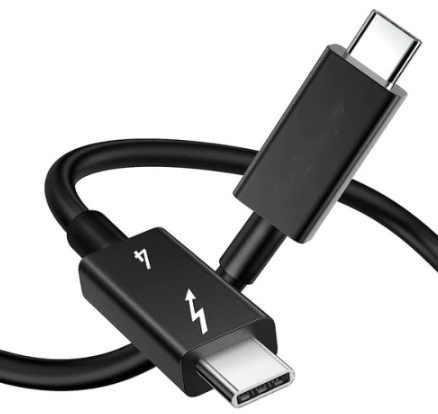
Traditionally, a Thunderbolt dock is also an option. As long as your laptop has a Thunderbolt port, its 40Gbps bandwidth can support two 4K monitors (running at 60Hz) and a variety of peripherals. It's important to note that you can use a USB-C dock even if your computer has a Thunderbolt port. In addition, USB4 technology is basically similar to Thunderbolt, so the two functions are similar in your use case.
Currently, there are two other technologies that are in the middle: DisplayLink USB-C docks and USB-C docks that utilize HBR3 and DSC.
DisplayLink, owned by Synaptics, uses software compression between the laptop and the dock to give users a Thunderbolt-like experience over a generic USB-C connection. It requires software drivers to use, and in our experience it works well for office use, but not for gaming. If you're interested in DisplayLink docks, check out our roundup of the best DisplayLink docks and why you should buy them.
HBR3 with Display Compression (HBR3 with DSC) is essentially the industry standard version of DisplayLink. But it's not widely available yet, and support needs to improve. In our experience, HBR3-enabled docks work well with laptops using 12th Gen Core processors and above; laptops with 10th Gen Core chips are not supported, and 11th Gen Core laptops are not stable. If you have a 12th Gen Core laptop, especially one from Intel's high-end Evo brand, you'll have a good chance of success with this technology; otherwise, it's probably not recommended.
4. Don’t worry too much about platform brands
Since USB-C interfaces are widely used in Macs, Windows PCs, and mobile phones, some hubs will link their brands to specific platforms. In fact, you can use USB-C hubs advertised as "for MacBook Pro, Chromebook, and XPS" to connect any Windows PC. We have tested and it works perfectly without installing any special software or drivers.
After testing many USB-C hubs, we found that some products from unknown brands have comparable performance to well-known brands and are more affordable. However, it should be noted that since price is an important consideration for our recommended products, and manufacturers may offer discounts at any time, the prices of some products will change. Therefore, some hubs that were not recommended by us due to price factors may become more valuable after the price adjustment.